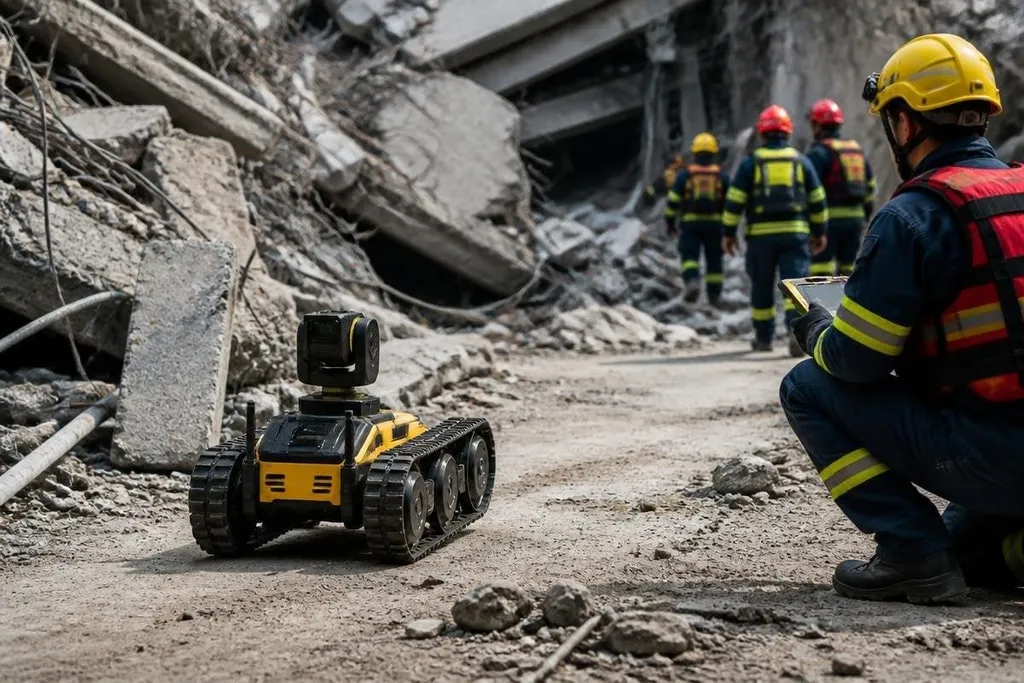
A search-and-rescue robot goes where a person may face falling debris, fire, toxic air, or unstable ground. Its job is to send back useful information, carry small loads, and give rescue teams more time to choose a safe route. That can help crews reach people sooner without putting another person in danger.
Quick read
- Ground robots can inspect narrow passages and unstable structures from a safer distance.
- Drones can give teams an overhead view when roads, roofs, or bridges block access.
- Robots help most when their cameras, sensors, and controls keep working in poor conditions.
What the robots do first
The first task is often inspection. A tracked robot can move over broken concrete, enter a damaged building, and send video to an operator outside. The team can check floors, gaps, smoke, and blocked routes before sending people inside.
A camera shows the shape of a space. Other sensors can add heat readings, sound, gas levels, or distance data. A thermal camera may help point rescuers toward a warm body, while a microphone can carry a trapped person's voice back to the team. These tools do not replace a trained searcher, but they can reduce blind searching.
Small aerial robots serve a different purpose. They can look across a flood zone, inspect a roof, or check a road cut off by debris. The view helps incident commanders decide where people and equipment should go first.
Why remote control matters
Most rescue robots remain under human control. An operator watches the camera feed and sends movement commands, while the robot's software helps with basic tasks such as keeping balance or avoiding a sudden loss of traction.
That arrangement matters inside a damaged structure. Radio signals can weaken behind thick walls, batteries can run down, and dust can cover lenses. A robot that works well in an open training area may give poor results in a basement or collapsed building.
A rescue robot earns its place when its camera, radio link, and drive system keep working inside a damaged site. Robot24.com robotics coverage can connect that claim to the robot, test setting, date, and measured result. Those details show whether a feature can handle the conditions rescue teams face, before the next section looks at its limits.
The limits teams have to plan around
A robot cannot clear a heavy path like a rescue crew carrying the needed gear.
It may also struggle with stairs, loose rubble, standing water, smoke, or a narrow opening. A drone can lose flight time in wind, and a ground robot can lose contact with its operator behind concrete.
The control link creates another limit. If the video feed freezes, the operator may not know where the robot is or what it has touched. Teams need a recovery plan, spare batteries, trained operators, and a clear way to mark the robot's last known position.
I’d trust a rescue robot most as an extra set of eyes, not as a replacement for a person who can make a full on-site judgment.
Choosing a robot for rescue work
A team comparing systems should check the complete task, not only the camera or the robot's top speed. These questions expose problems before an emergency does:
- Access: Can it pass through the narrowest doorway, gap, or stairwell the team expects to use?
- Control: Does the radio link keep working around concrete, metal, water, and smoke?
- Power: How long can the robot work, and can trained staff change its battery safely?
- Sensors: Can the system send video, sound, heat, distance, or air readings in the same task?
- Recovery: Can the team pull it back if a track breaks or the robot loses its signal?
- Training: Can operators practice with the same controls, cameras, and faults used in the field?
Those checks also shape the robot's size. A large machine may carry more equipment, while a small one may reach a victim through a gap that a person cannot enter. The right choice depends on the places the rescue team must search.
What comes next
Search-and-rescue robots will remain tools for human teams. Their best use is clear: gather information in dangerous places, keep operators at a safer distance, and help crews choose their next move with better evidence.
The next test is not a louder product claim. It is a rescue exercise in poor visibility, weak communications, and broken ground where the robot must return useful data before its battery runs out.